


Play Kitchens
-
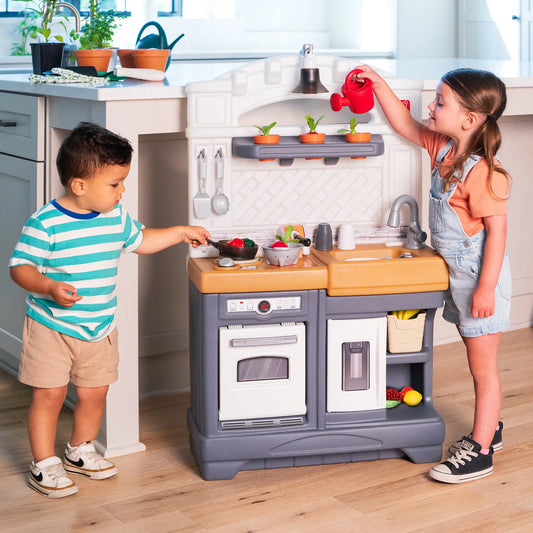
Garden Fresh Kitchen™
Regular price $148.99Regular priceUnit price per -
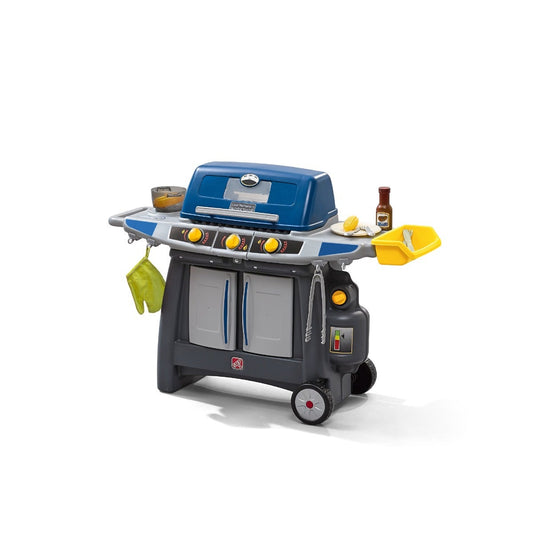
Sizzle & Smoke Barbeque Grill™
Regular price $106.99Regular priceUnit price per -
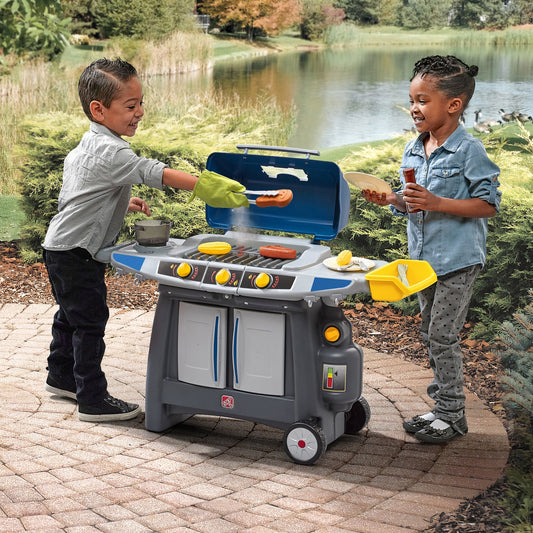
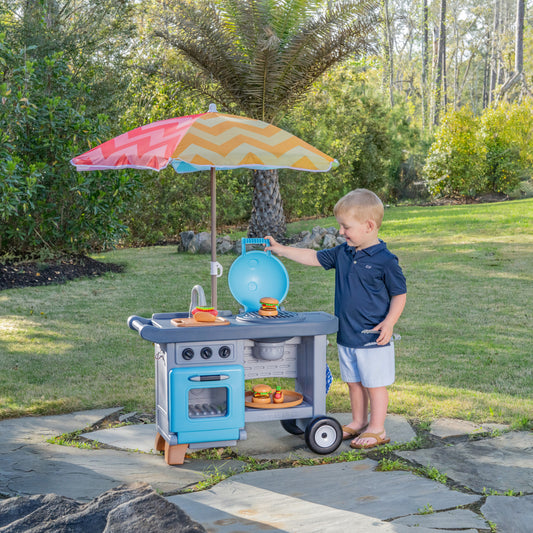
Grill & Go BBQ Cart with Lights and Sounds™
Regular price $159.99Regular priceUnit price per -
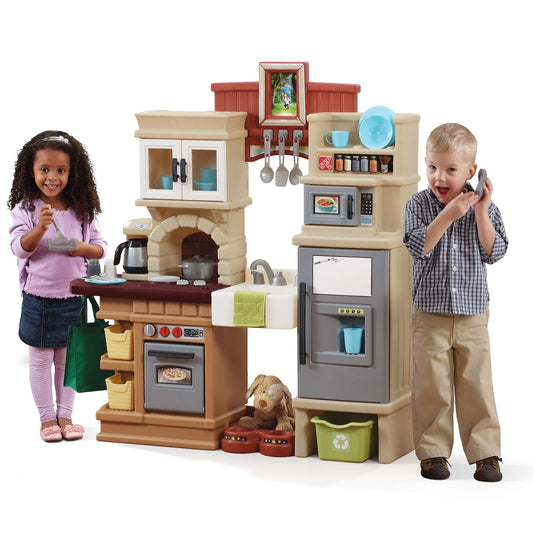
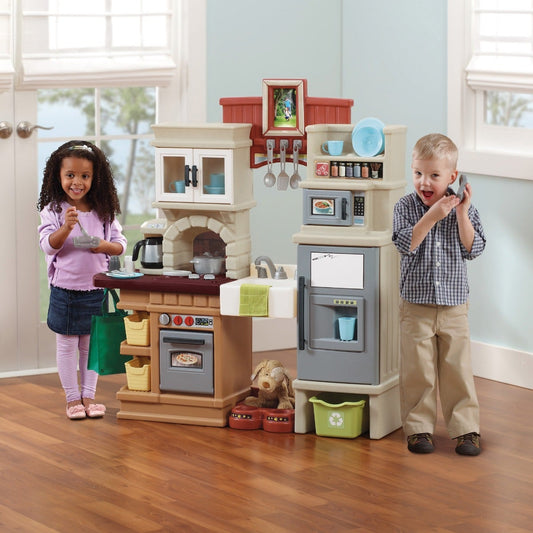
Heart of the Home Kitchen™
Regular price $209.99Regular priceUnit price per -
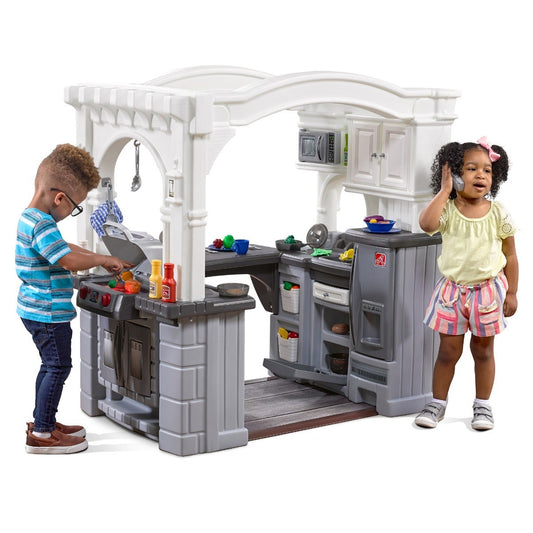
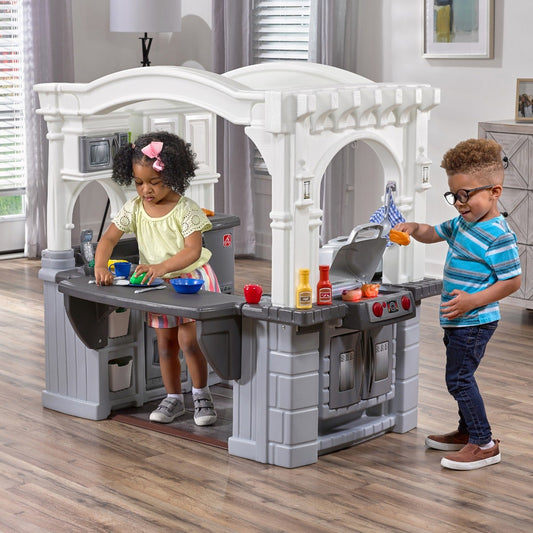
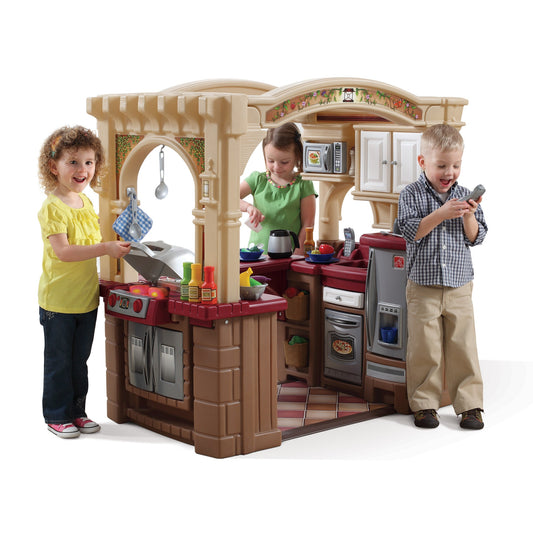
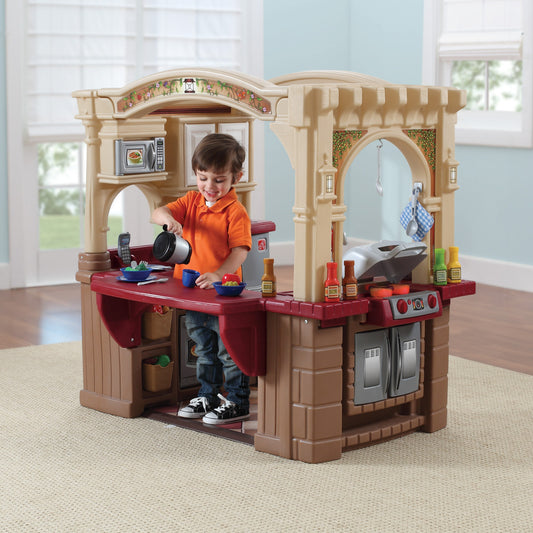
Grand Walk-In Classic Kitchen & Grill™
Regular price $339.99Regular priceUnit price per -
Grand Walk-In Kitchen & Grill™
Regular price $339.99Regular priceUnit price per -
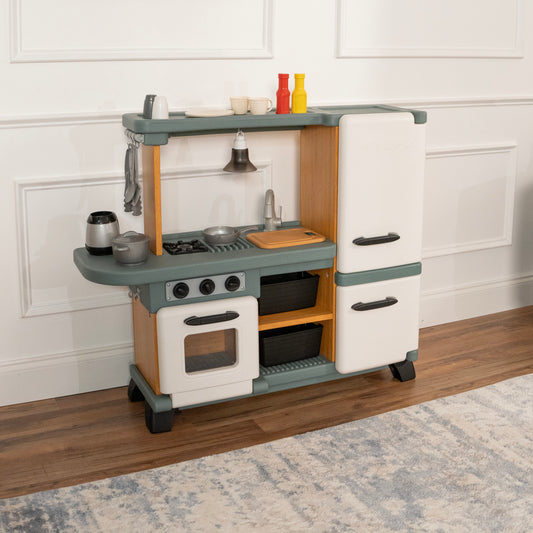
Harmony Play Kitchen™
Regular price $219.99Regular priceUnit price per -
Modern Metro Kitchen™
Regular price $229.99Regular priceUnit price per -
Elegant Edge Kitchen™
Regular price $429.99Regular priceUnit price per -
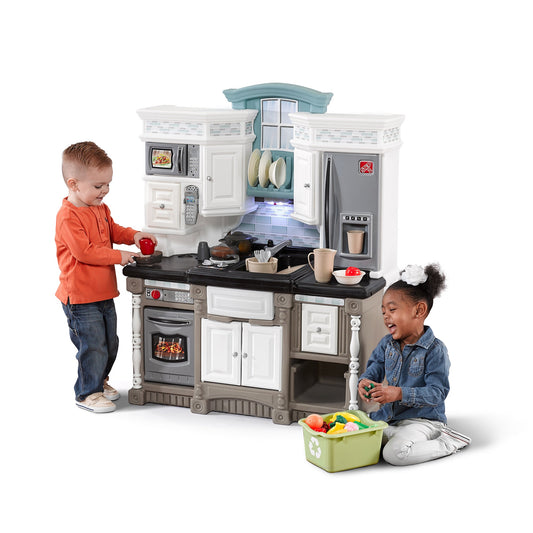
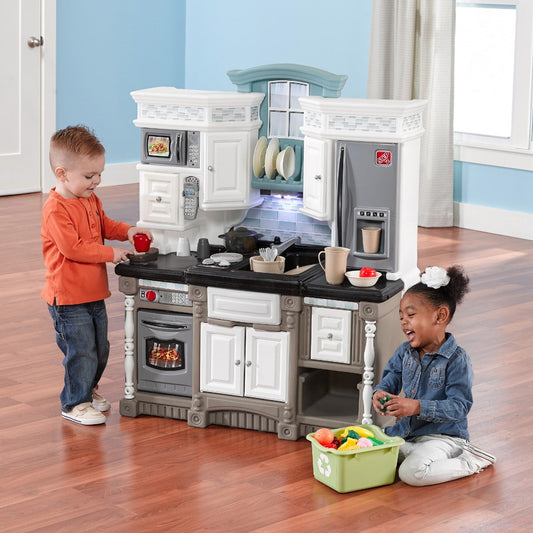
LifeStyle™ Dream Kitchen™
Regular price $259.99Regular priceUnit price per -
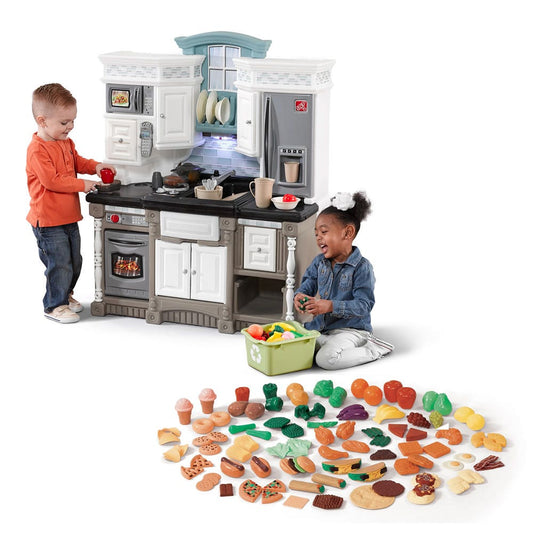
Dream Kitchen™ with Extra Play Food Set
Regular price $289.99Regular priceUnit price per -
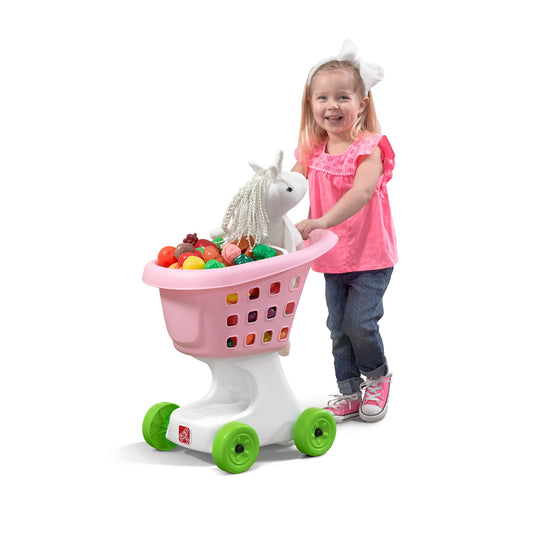
Little Helper's Shopping Cart - Blue with boy pushing cart full of groceries

-
Best Chef's Kitchen™
Regular price $99.99Regular priceUnit price per$109.99Sale price $99.99Sale -
Choice Cuisine Kitchen™
Regular price $109.99Regular priceUnit price per



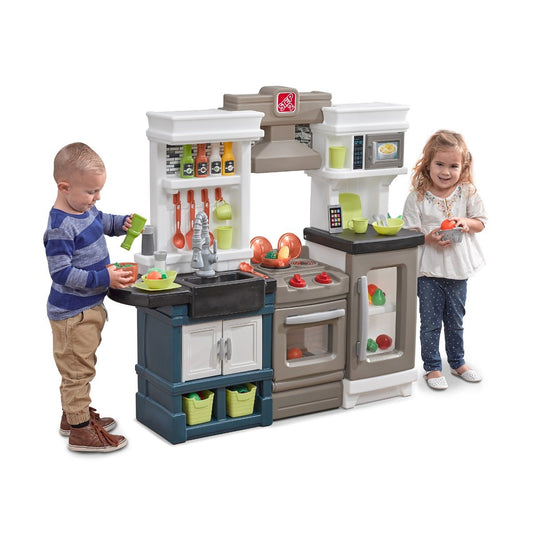
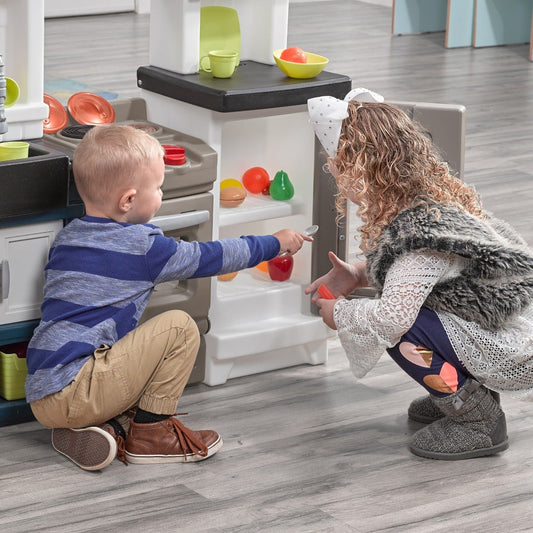
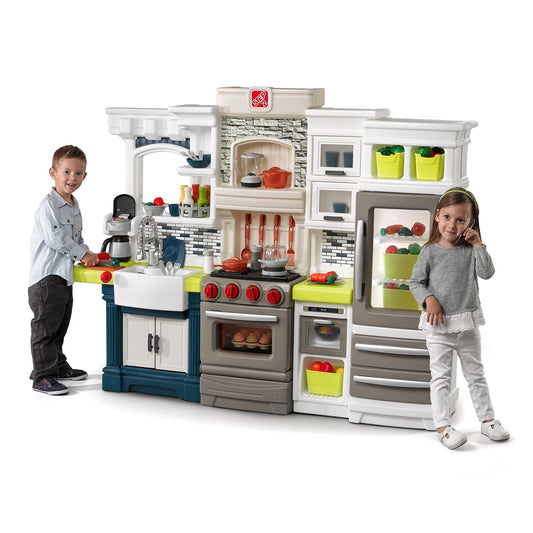
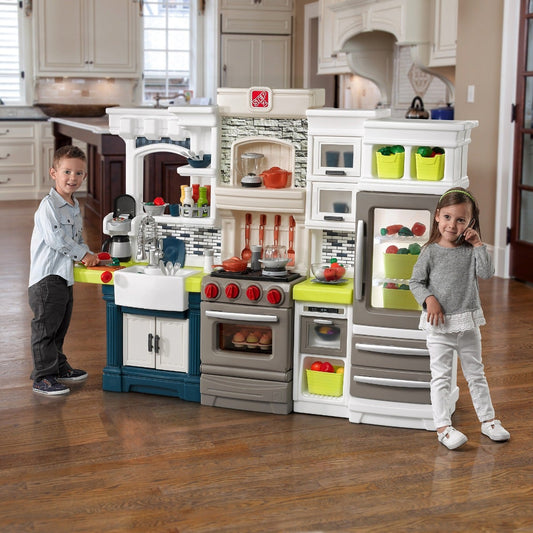


FAQs About Play Kitchens
What is a play kitchen?
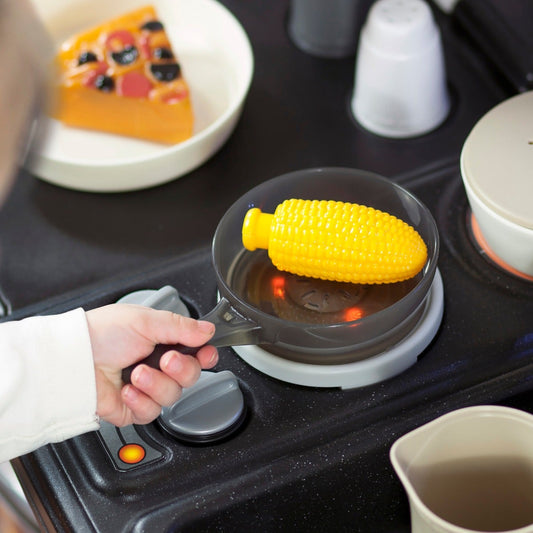
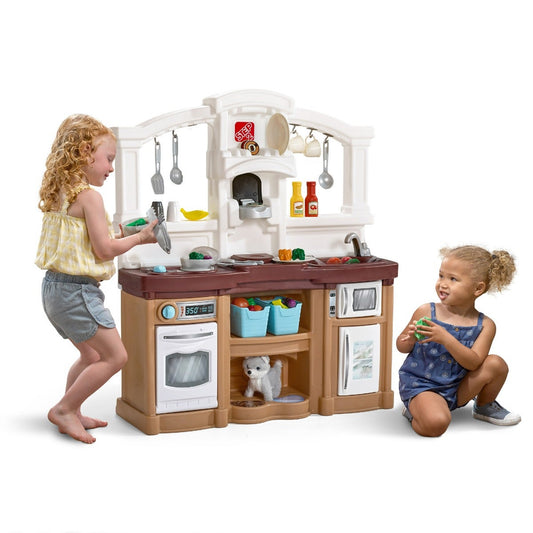
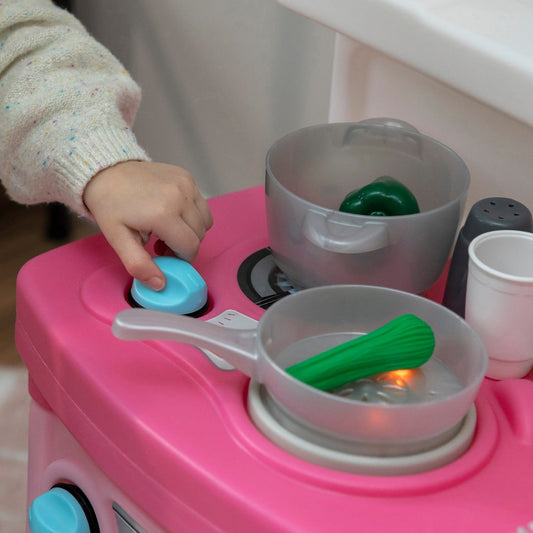
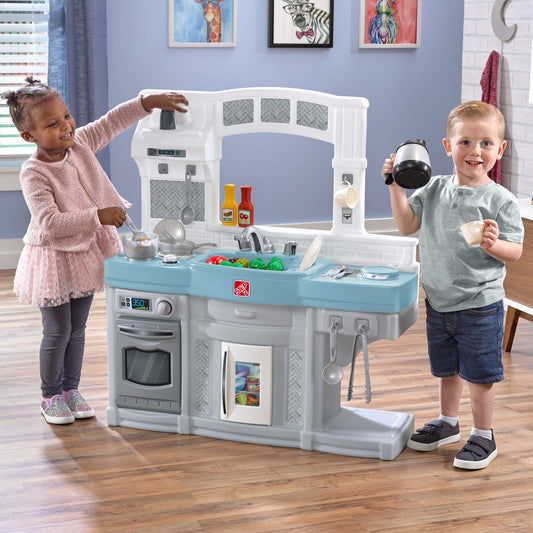
A play kitchen is a kid-sized pretend kitchen designed to support imaginative play, role play, and early social skill development. Most play kitchens are sized for toddlers and preschoolers ages 2 to 6 and include features like pretend stovetops, ovens, sinks, refrigerators, and storage cabinets. Step2 play kitchens are made from durable plastic, work for indoor or outdoor use, and include interactive features like clicker knobs, working doors, and electronic stovetops with lights and sounds.
What age is a play kitchen best for?
Play kitchens are best for kids ages 2 to 6, with most Step2 play kitchens recommended for toddlers and preschoolers ages 2 and up. Toddlers around age 2 enjoy simple interactive features like clicker knobs and pretend faucets, while preschoolers ages 3 to 5 engage with more complex pretend play scenarios. Larger play kitchens with extensive accessory sets, like the Step2 Elegant Edge Kitchen, stay engaging through kindergarten and beyond. Always check the individual product page for the exact age recommendation.
When do toddlers start playing with play kitchens?
Toddlers typically start enjoying play kitchens between 18 months and 2 years old, when imaginative and pretend play first emerges. At this age, kids start imitating everyday activities like stirring a pot, washing dishes, or talking on the phone. By ages 3 to 5, pretend play becomes more elaborate, with kids inventing storylines, taking on roles like chef or restaurant server, and playing cooperatively with siblings or friends. Step2 play kitchens are designed to support this developmental progression with age-appropriate features.
Why is pretend play important for child development?
Pretend play helps toddlers and preschoolers build language, problem-solving, empathy, and cooperative social skills by acting out everyday scenarios and taking on different roles. Early childhood researchers connect imaginative play to stronger executive function, vocabulary growth, and emotional regulation. Play kitchens are an especially effective tool because they invite kids to mimic adult role models — cooking, serving, cleaning up — while practicing fine motor skills, sequencing, and turn-taking with siblings or friends. Even 20 to 30 minutes of pretend play a day can support healthy social and cognitive development.
What is the difference between a plastic and a wooden play kitchen?
A plastic play kitchen is lightweight, weather-resistant, and easy to wipe clean, while a wooden play kitchen tends to be heavier and requires more careful indoor placement to avoid moisture damage. Plastic play kitchens are often a better choice for toddlers because the rounded corners and smoother surfaces are easier on little hands, and they handle daily wear from spills, sticky fingers, and outdoor use. Step2 plastic play kitchens are designed for both indoor and outdoor play and built to resist chipping, fading, cracking, and peeling.
What accessories come with a play kitchen?
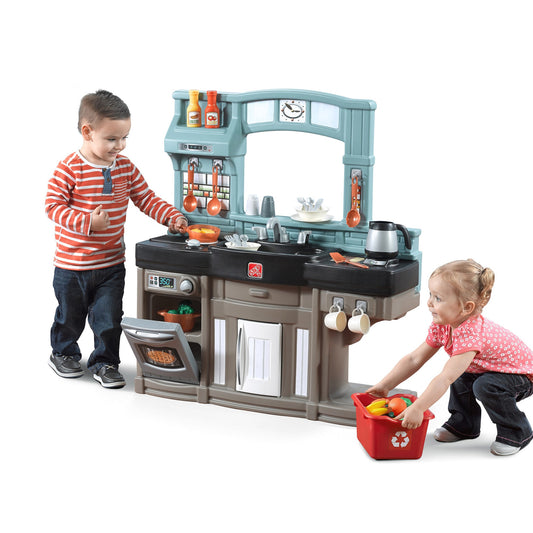
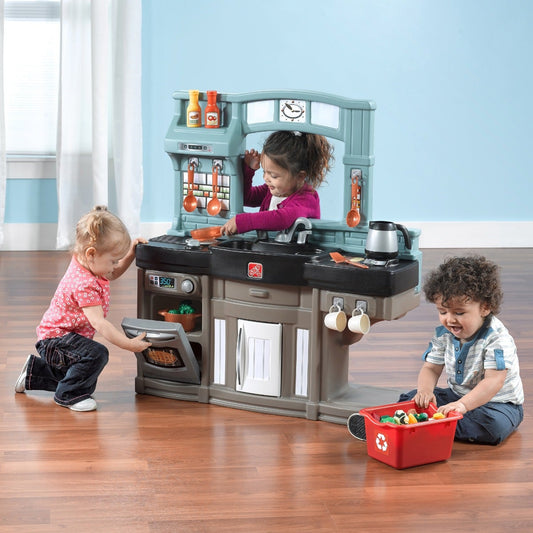
Most Step2 play kitchens include an accessory set with pretend pots, pans, utensils, plates, cups, and play food pieces. Accessory counts vary by model — the Step2 Best Chef's Kitchen includes 25 pieces, the Heart of the Home Kitchen includes 41 pieces, and the larger Grand Walk-in Kitchen & Grill includes more than 100 pieces. Additional [play kitchen accessories](https://www.step2.com/collections/play-kitchens) like dedicated play food sets, cookware, and utensil sets are also available to expand the play experience as kids grow.
Are play kitchens good for boys and girls?
Yes, play kitchens are designed for all kids — boys, girls, and non-binary kids — since cooking and food preparation are everyday skills every child benefits from practicing. Step2 play kitchens come in a range of color palettes and styles, from neutral slate and gray to bright pink and modern white, so families can pick the kitchen that fits their child and home. The benefits of pretend kitchen play — fine motor skills, language development, role play, and cooperative social skills — apply equally regardless of gender.
How do you clean a plastic play kitchen?
To clean a plastic play kitchen, wipe down all surfaces with a damp cloth and mild soap, then rinse with a clean damp cloth to remove residue. For tougher dirt or sticky spots, use a soft-bristle brush — avoid abrasive scrubbers or harsh chemicals that can scratch the plastic finish. Step2 play kitchens are built to resist chipping, fading, cracking, and peeling, so regular wiping is usually all that's needed. Wash plastic accessories like cookware and play food in warm soapy water and let air dry before returning them to the kitchen. See our full guide to [cleaning Step2 toys, planters, and pool furniture](https://www.step2.com/blogs/blog/how-to-clean-your-step2-toys-planters-pool-furniture) for more care tips.
Are play kitchens worth it?
Yes, play kitchens are widely considered a worthwhile investment because they support multiple years of imaginative play and developmental growth. Most kids use a play kitchen actively from ages 2 to 6, which is one of the longest engagement windows of any single toy. Beyond entertainment, play kitchens build fine motor skills, language, role play, and cooperative social skills — the same skills early childhood programs focus on. Many Step2 play kitchens are made in the USA from durable plastic and include 20 to 100+ accessory pieces, adding to the long-term value compared to single-purpose toys.
